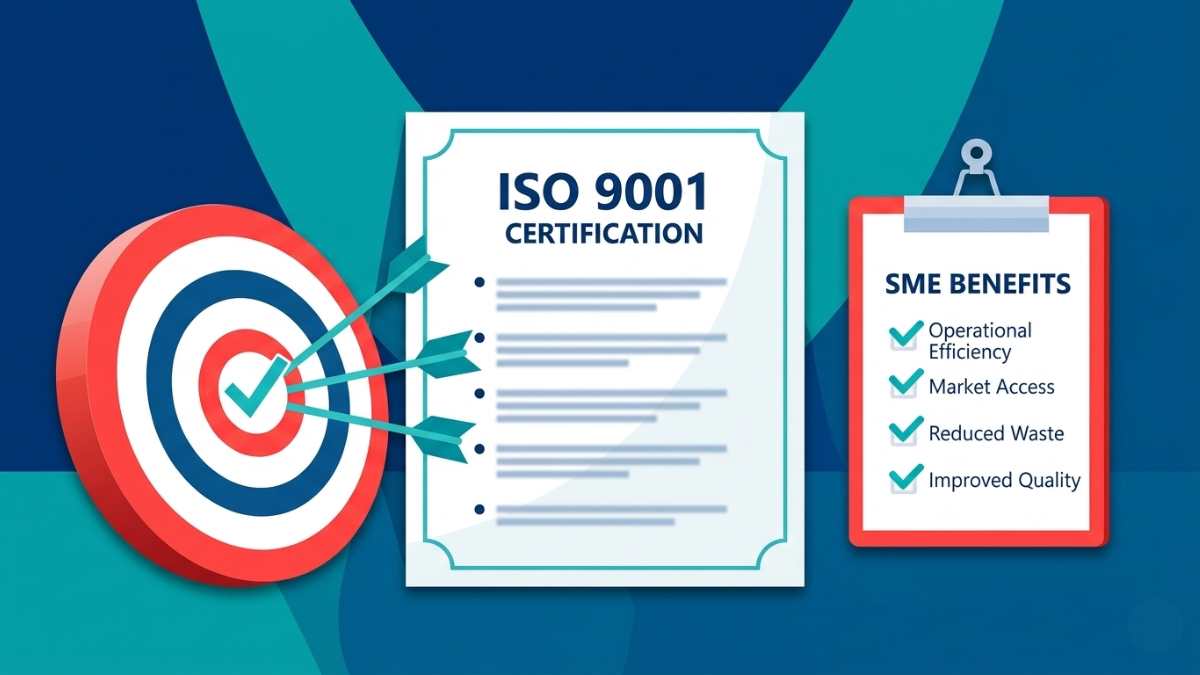
Achieving ISO 9001 certification costs a lot of time, money, and management attention. Is it genuinely worthwhile for a small or medium-sized business, or is it something larger organizations do to satisfy procurement departments while smaller firms quietly get on without it?
The honest answer is that it depends on your specific situation. ISO 9001 delivers significant, measurable value for some businesses and relatively little for others. This article sets out the evidence on both sides so you can make an informed decision rather than one based on marketing material from certification bodies or ISO consultants who have a commercial interest in your answer being ‘yes’.
When ISO 9001 Is Clearly Worth It
There are circumstances in which the case for ISO 9001 is straightforward. If any of the following apply to your business, certification is very likely to pay for itself.
Your customers or contracts require it
This is the most common reason SMEs pursue ISO 9001, and the most clear-cut case for doing so. If a significant customer has told you that ISO 9001 certification is required to remain on their approved supplier list, or if the contracts you want to bid for specify it as a pre-qualification requirement, the commercial case is simple: the cost of certification is less than the cost of losing the work.
In the UK, many public sector frameworks, Ministry of Defence supply chain requirements, and NHS procurement processes either require or give strong preference to ISO 9001 certified suppliers. In the US, federal government contracts and defense supply chains carry similar expectations. In Ireland, Enterprise Ireland-supported exporters frequently find that international customers expect it.
You are trying to win work in competitive tenders
Even where certification is not explicitly required, it provides a credible differentiator in competitive bids. Many tender scoring frameworks allocate points for quality management credentials. An accredited ISO 9001 certificate from a UKAS, ANAB or INAB-approved body signals to a procurement team that your quality processes have been independently verified, which reduces their perceived risk in awarding work to you.
Your business has a quality or consistency problem
If your business regularly experiences customer complaints, defects, rework, or inconsistent output, ISO 9001 implementation forces you to confront and address the root causes in a structured way. The standard requires you to document your processes, measure your performance, and take corrective action when things go wrong. For businesses that have grown quickly and informally, this discipline can produce operational improvements that have nothing to do with the certificate itself.
The process of implementing a QMS often surfaces inefficiencies that have been quietly costing money for years: undocumented processes that create rework when a key person leaves, supplier issues that have never been formally tracked, or quality checks that vary depending on who is on shift. Addressing these has a tangible financial return.
You are planning to grow, scale, or seek investment
ISO 9001 provides a framework for making your business less dependent on any individual and more capable of operating consistently as it scales. For businesses preparing for growth, acquisition, or investment, a certified quality management system demonstrates operational maturity to due diligence teams and investors. It also makes onboarding new staff into established processes significantly easier.
| Arguments in favor | Arguments against |
|---|---|
| Opens tendering and procurement opportunities | Significant upfront time and cost investment |
| Independent verification of quality processes | Ongoing annual maintenance commitment |
| Forces documentation of critical processes | Can become box-ticking if not embedded genuinely |
| Surfaces inefficiencies and reduces rework | Limited value if customers do not require it |
| Supports business scaling and staff onboarding | Certificate from non-accredited body has little worth |
| Internationally recognized in 170+ countries | Poorly implemented systems create bureaucracy, not value |
When ISO 9001 May Not Be Worth It
There are also situations in which ISO 9001 is unlikely to deliver a return that justifies its cost and effort. Being honest about these helps businesses avoid certifying for the wrong reasons.
Your customers do not ask for it and are unlikely to
If you operate in a market where customers do not require or value ISO certification, the commercial case is weak. A local plumbing business, a creative agency, or a specialist professional services firm may find that their clients simply do not ask about ISO 9001 and that having it makes no difference to their ability to win or retain work. In these cases, the cost of certification may outweigh any likely benefits.
You cannot genuinely commit to maintaining the system
ISO 9001 is not a one-off exercise. It requires ongoing internal audits, management reviews, corrective action management, and annual certification body surveillance audits. Businesses that certify without genuine commitment to maintaining the system often find themselves with a certificate that does not reflect how the business actually operates. This creates more risk than not certifying at all: a poorly maintained QMS can generate evidence of problems that would not otherwise be documented.
You are pursuing it solely because a consultant recommended it
ISO consultants are paid to help businesses achieve certification. That does not make their advice bad, but it does mean you should form your own view on whether certification is right for your business before engaging one. If the only reason you are considering it is that someone suggested it might be useful, it is worth pausing to assess whether your customers actually care.
The honest verdict
ISO 9001 is worth pursuing if: your customers require or value it, you are competing for contracts where it provides a meaningful advantage, or you have a genuine quality or consistency problem that a structured management system would help address.
It is not worth pursuing if: your customers do not care about it, you cannot commit the internal resource to maintain it properly, or you are doing it primarily to have a certificate rather than to improve how your business operates.
What the Evidence Says
Research on the impact of ISO 9001 certification produces broadly consistent findings, though the magnitude of benefits varies significantly based on how genuinely the standard is implemented.
- A study published in the International Journal of Production Economics found that firms achieving ISO 9001 certification experienced measurable improvements in operational performance, including reductions in defect rates and improvements in delivery reliability, when the standard was implemented substantively rather than ceremonially.
- Research from the British Standards Institution found that ISO 9001 certified organizations in the UK reported higher customer satisfaction scores and lower customer complaint rates than non-certified peers in the same sectors.
- A consistent finding across multiple studies is that the benefits are concentrated among organizations that treat the standard as a genuine management tool rather than a compliance exercise.
The gap between organizations that genuinely benefit from ISO 9001 and those that do not almost always comes down to the same thing: whether the management system reflects how the business actually operates, or whether it is a set of documents that exist to satisfy an auditor.
Questions to Ask Before You Decide
If you are weighing up whether ISO 9001 is right for your business, the following questions will help you reach a clear-headed conclusion.
- Have any customers or prospects specifically asked for ISO 9001 certification, or indicated they would prefer certified suppliers?
- Are there contracts or frameworks you want to bid for that specify ISO 9001 as a requirement?
- Do you currently experience quality or consistency problems that cost you time, money, or customer relationships?
- Do you have documented processes for your key activities, or does critical knowledge live primarily in people’s heads?
- Do you have a team member with the capacity and inclination to lead the implementation and maintain the system ongoing?
- Can your leadership team commit to genuine engagement with the management review process rather than treating it as an annual formality?
If you answered yes to several of these, certification is likely to deliver real value. If most of your answers were no, it is worth asking whether your time and budget could generate a better return elsewhere.
Accreditation: Why It Matters
One point that is not always made clearly in discussions of ISO 9001 value: not all certificates are equal. A certificate issued by a certification body that holds accreditation from a recognized national body (UKAS in the UK, ANAB or IAS in the US, INAB in Ireland) is fundamentally different from one issued by an unaccredited body.
Many public sector contracts, defense supply chains, and large corporate procurement processes will only accept certificates from accredited certification bodies. If you certify with an unaccredited body to save money, you may find the certificate does not satisfy the customer requirement it was intended to meet. Always verify accreditation status before engaging a certification body.